Microplastics Are Inside Your Body Right Now — Here’s What the Science Says and What You Can Do
Published: April 24, 2026 | Category: Living · Health
This isn’t a distant environmental problem. Microplastics have been found in human blood, lungs, liver, kidneys, placentas, and most recently, brain tissue. The average person ingests an estimated 39,000 to 52,000 microplastic particles per year through food and drink alone — a number that rises above 121,000 when airborne particles are included.
In early April 2026, the EPA and HHS made a joint announcement on microplastics, signaling that federal regulators are no longer treating this as a future concern. The EPA and HHS announced historic actions to protect Americans from microplastics and safeguard drinking water on April 2, 2026. PolitiFact
Here’s what the science actually says — and what practical changes are worth making.
What Microplastics Actually Are
Microplastics are plastic fragments smaller than 5 millimeters. They come from two sources: plastics manufactured to be small (like the microbeads once used in face washes), and larger plastics that break down over time from heat, sunlight, and physical wear.
Some microplastics start as grocery bags, straws, cutlery, water bottles, or food packaging. Once discarded, these items get worn down by the sun, water, friction, and heat — eventually disintegrating into smaller and smaller pieces that enter the food chain through waterways, fish, and soil. Levels
The particles scientists are most concerned about are nanoplastics — fragments one-seventieth the size of a human hair. These are small enough to pass through the intestinal wall and lung tissue directly into cells.
Where They’re Coming From in Your Daily Life
The surprising finding from recent research is how much microplastic exposure comes not from the environment at large, but from your own kitchen.
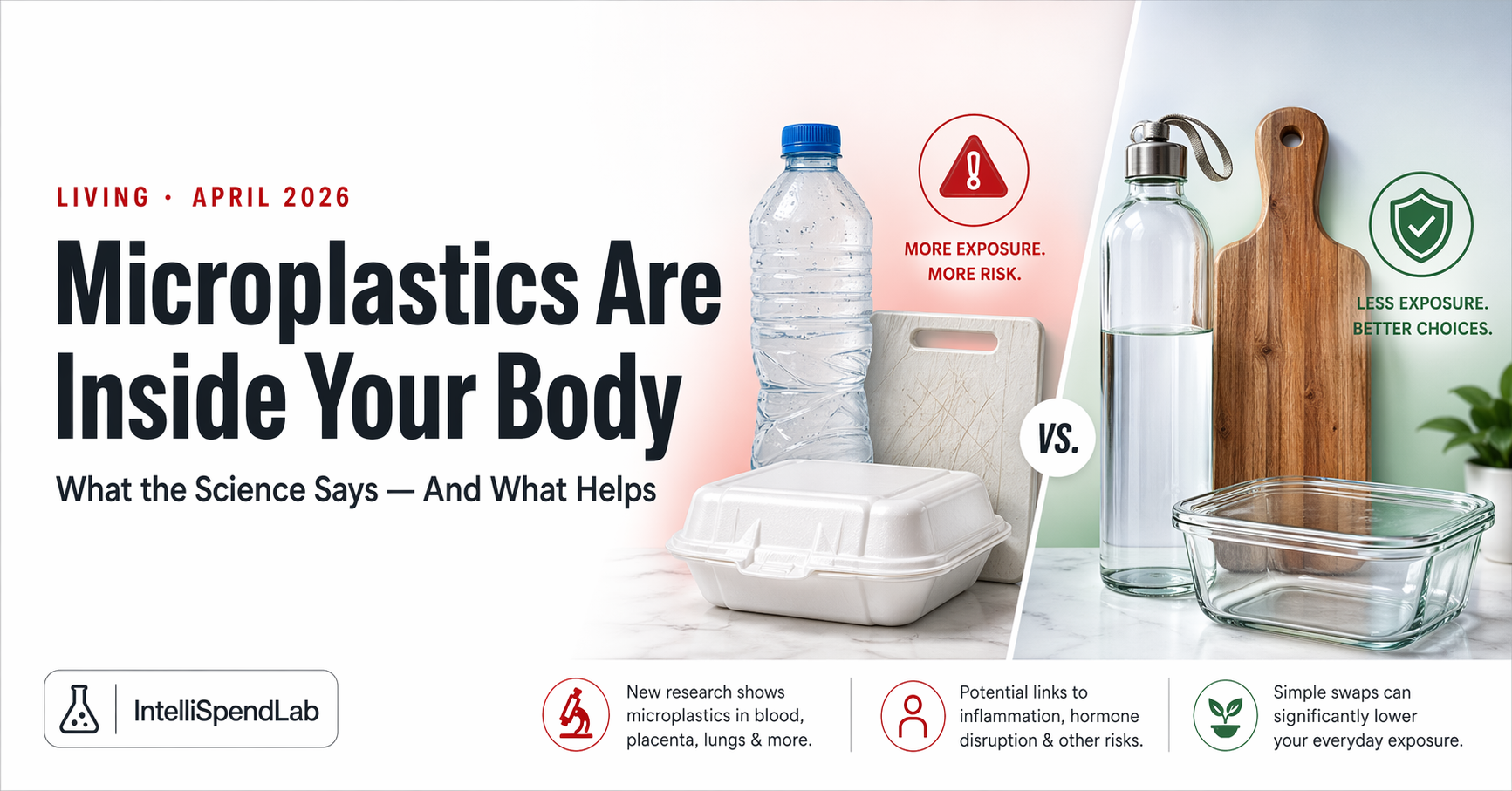
Everyday kitchen actions dramatically increase microplastic exposure. Plastic water bottles shed tens of thousands of microplastic particles per liter, including nanoplastics that easily enter the bloodstream. Plastic cutting boards shed up to 1,000 times more microplastics than previously estimated — millions of particles per use. Irenes
Other significant sources identified in 2026 research:
Plastic tea bags — A single plastic tea bag brewed at normal temperatures releases billions of microplastic and nanoplastic particles directly into the cup. Paper tea bags with plastic sealing are a common culprit.
Non-stick cookware — Scratched or worn PTFE (Teflon) coatings release microplastic particles when heated or scraped with metal utensils. The risk increases significantly once the surface is visibly damaged.
Plastic food containers heated in microwave — Heat accelerates plastic degradation. Experts particularly advise against eating from plastic containers when using a microwave, and avoiding single-use plastics including bags, straws, and disposable cutlery. PolitiFact
Bottled water — Consistently one of the highest sources of microplastic ingestion, with studies finding hundreds to thousands of particles per liter in popular brands.
Synthetic clothing in the wash — Each laundry cycle releases microfibers into wastewater. These eventually reach drinking water and food supplies through the water cycle.
What Health Risks Are Associated
The honest answer: research is still developing, and definitive causal links in humans are not yet established for most conditions. But the picture being assembled is concerning enough to take seriously.
Microplastics have been found in human blood, lungs, placenta, and brain tissue, with research showing they remain in tissues and accumulate over time. Animal studies suggest microplastics may cause inflammation, cellular damage, hormonal disruption, and potentially increase risks for conditions like cancer, heart disease, and dementia. One human study found that people with polyethylene detected in their artery plaque were 4.5 times more likely to experience heart attack, stroke, or death over a three-year follow-up period. Levels
Plastics contain additives like phthalates, bisphenol A (BPA), and flame retardants that can leach into the body. Some of these substances are being studied for their effects on the endocrine system — the body’s hormone-regulating network. Microplastics may also act as transport vehicles for other harmful substances, making it easier for chemicals to spread through the body. UPMC
The groups most likely to face higher risk are children and pregnant women, whose developing systems are more sensitive to hormonal disruption.
What Actually Reduces Exposure
The goal isn’t zero microplastics — that’s not achievable in 2026. The goal is meaningful reduction of your highest-exposure sources. Here’s what the evidence supports.
In the Kitchen
Switch your cutting board to wood or glass. Plastic cutting boards are one of the highest sources of microplastic ingestion in the home. A wooden board doesn’t shed plastic particles into your food. This is one of the highest-impact, lowest-cost changes you can make.
Replace scratched non-stick pans. Once the coating shows visible wear, replace it. Stainless steel, cast iron, or ceramic cookware are better long-term choices for anyone concerned about microplastics.
Never heat food in plastic containers. Transfer food to glass or ceramic before microwaving. This single habit change removes one of the most significant exposure routes.
Switch to loose-leaf tea or paper tea bags with no plastic sealing. Check the packaging — many popular tea bag brands use plastic in the bag material or sealing.
Use a water filter for drinking water. A water filter certified to remove microplastics — specifically reverse osmosis filters or those with pore sizes smaller than 1 micron — can significantly reduce microplastic ingestion from tap water. Cape Cod This is more effective than switching to bottled water, which carries its own microplastic load.
Beyond the Kitchen
Wash synthetic clothing less frequently, and use a microfiber-catching laundry bag. Products like the Guppyfriend bag capture microfibers before they enter wastewater. Washing on cold and shorter cycles also reduces fiber shedding.
Choose fresh, minimally processed food over heavily packaged options. The more a food has been in contact with plastic packaging, the higher the microplastic load.
Ventilate your home. Indoor air often has higher microplastic concentrations than outdoor air due to synthetic textiles, furniture, and carpeting. Regular ventilation and HEPA air filtration help.
The Bigger Picture
Dr. Philip Landrigan, a pediatrician and researcher who studies hazardous environmental exposures, says: “Don’t feel guilty about the fact that you can’t completely eliminate plastic from your life. It’s not possible.” The focus should be on reducing the highest-exposure sources rather than attempting perfection. PolitiFact
The science is clear that microplastics are inside us, accumulating, and producing effects that researchers are still working to fully characterize. The regulatory response is now accelerating — the 2026 EPA/HHS announcement marks a shift from awareness to action at the federal level. The practical response for individuals is to make the kitchen swaps that move the needle most, and let the regulatory system handle the larger infrastructure changes.