DJI Osmo Pocket 4 Is Here — Full Specs, Pricing, and Everything That Changed
Published: April 16, 2026 | Category: Tech
⚡ Published on launch day — April 16, 2026
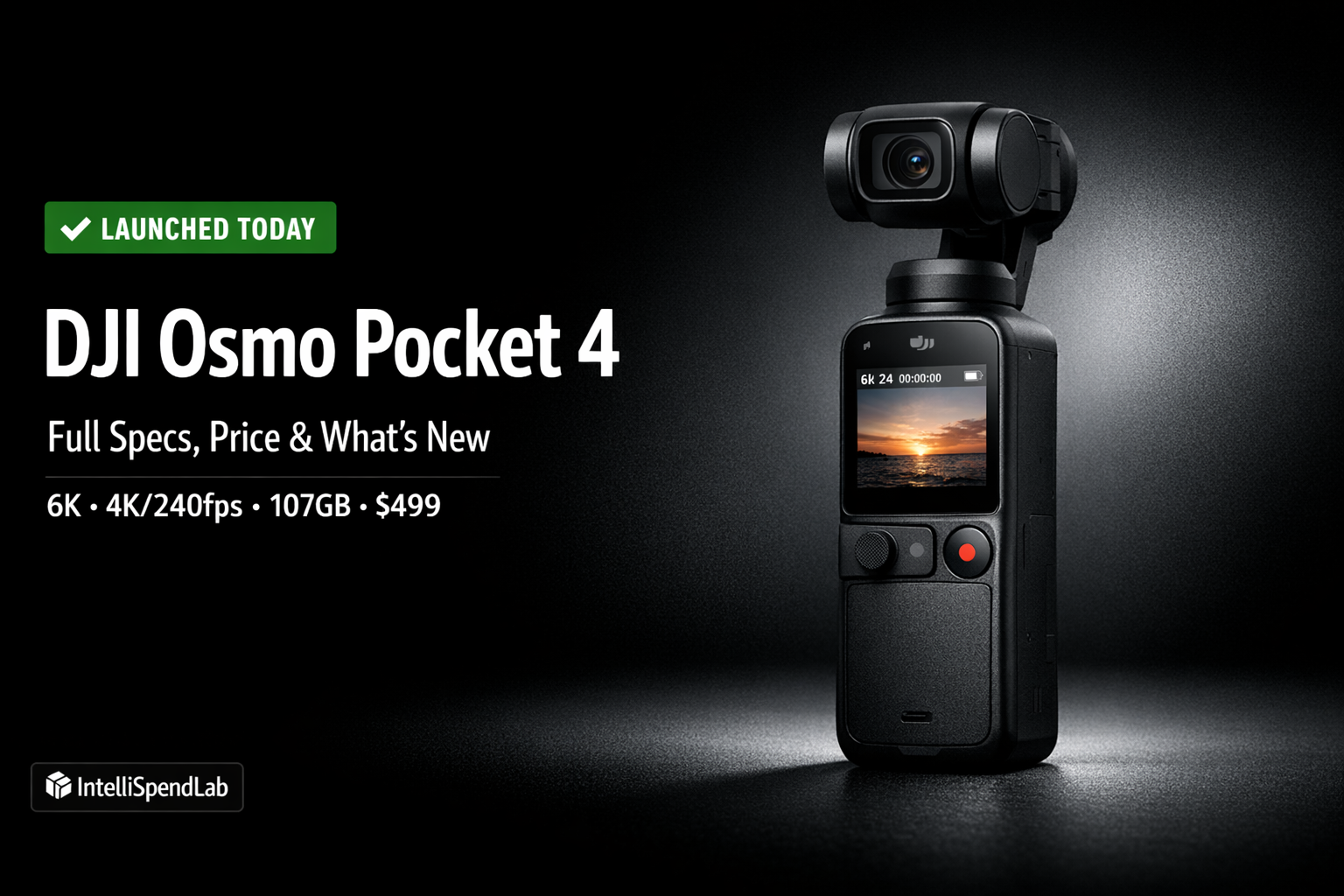
The DJI Osmo Pocket 4 officially launched today, April 16, 2026, at 12:00 PM GMT. Starting price: $499 USD. 360TechGuide After months of leaks, FCC filings, retail box photos, and cryptic social media posts from DJI, the Osmo Pocket 4 is finally real. The tagline DJI chose — “The World In My Pocket” — signals exactly what this camera is meant to be: not a replacement for a mirrorless setup, but the most capable all-in-one pocket camera ever made.
Here’s the complete breakdown of everything that’s new, everything that’s confirmed, and whether it’s worth buying.
The Full Official Spec Sheet
Key confirmed specs include a 1-inch CMOS sensor, 14-stop dynamic range, 4K at 240fps, 6K at 30fps, 107GB built-in storage at 800MB/s, 1,545mAh battery, Wi-Fi 6, USB 3.1, 4-channel audio, 2x lossless zoom, and a 3-axis mechanical gimbal. 360TechGuide
| Spec | DJI Osmo Pocket 4 |
|---|---|
| Sensor | 1-inch CMOS, 50MP |
| Dynamic range | 14 stops |
| Color profile | 10-bit D-Log M |
| Max video | 6K / 30fps |
| Slow motion | 4K / 240fps |
| Zoom | 2x lossless / 4x digital |
| Built-in storage | 107GB at 800MB/s |
| microSD slot | Removed |
| Audio | 4-channel |
| Display | 2-inch rotatable OLED touchscreen |
| Stabilization | 3-axis mechanical gimbal |
| Subject tracking | ActiveTrack 7.0 |
| Battery | 1,545mAh (~200 min at 1080p/24fps) |
| Connectivity | Wi-Fi 6, USB 3.1 |
| Weight | ~116g |
| Price (standard) | $499–$599 |
| Price (Creator Combo) | $649–$749 |
| Global shipping | ~April 20, 2026 |
The 5 Upgrades That Actually Matter
1. 4K at 240fps — A Genuine Industry First at This Price
This is the headline spec and it deserves the attention it’s getting. The jump to 240fps at 4K resolution is a bigger milestone than you might have thought. No affordable, widely available cameras currently support true 4K/240fps slow-motion. Those that do carry price tags of up to $10,000 because they are used in movie productions. Notebookcheck For context: the iPhone 17 Pro maxes out at 4K/120fps. The Pocket 3 maxed out at 4K/120fps. Getting to 240fps at full 4K in a $499 pocket camera is a meaningful generational leap for slow-motion content — think water splashes, sports moments, and dynamic action that unfolds over just fractions of a second, stretched into several seconds of smooth cinematic playback.
One honest caveat worth noting: high frame rates and extended recording sessions generate significant thermal output in a small body. Heat management remains a critical concern, and DJI may need to manage this through recording time limits on the highest frame-rate modes. Geeky GadgetsReal-world testing will tell us how aggressively the camera throttles when pushed.
2. 107GB Built-In Storage at 800MB/s — No More Memory Cards
107GB of built-in storage at 800MB/s means DJI removed the microSD card slot entirely, suggesting a full commitment to internal storage. The 800MB/s transfer speed means files move to a computer in seconds. DroneXL This is one of the most practically significant upgrades for everyday users. Running out of storage mid-shoot, forgetting a card at home, or dealing with slow transfers — all of that disappears. The trade-off is that you can’t expand storage beyond 107GB, and some professional workflows (like handing off a card to an editor on set) will require adjustment. But for the vast majority of creators, 107GB is more than enough for a full day of shooting in 4K.
3. 14-Stop Dynamic Range — Cinematic Highlight Control
While the Pocket 3 had a great 1-inch sensor, the Pocket 4 upgrades the dynamic range to 14 stops. This allows creators to capture stunning details in both high-brightness skies and deep shadows simultaneously, making it ideal for cinematic HDR grading. Startrc Dynamic range is what determines whether a sunset shot shows both the bright sky and the shadowed foreground at the same time, or blows out one to expose the other. 14 stops is legitimately professional-grade — equivalent to many dedicated cinema cameras.
Combined with 10-bit D-Log M color profile, the Pocket 4 gives colorists genuinely workable footage to grade, rather than the compressed, limited-latitude footage that most cameras at this price tier produce.
4. 4-Channel Audio — Built-In Studio Sound
The Pocket 3 recorded in stereo. The Pocket 4’s new OsmoAudio system captures immersive 4-channel sound, providing more flexibility in post-production to isolate or blend audio sources. Combined with the built-in fill light in the Creator Combo, this gets closer to a complete one-device production kit without needing external accessories for most shoots. Startrc For vloggers and solo creators especially, eliminating the need for a clip-on microphone for everyday shooting is a real quality-of-life improvement.
5. Wi-Fi 6 + USB 3.1 — Workflow Speed Finally Keeps Up
Wi-Fi 6 replaces Wi-Fi 5, and USB 3.1 replaces the older USB-C spec. Combined with the 800MB/s built-in storage, these connectivity upgrades mean that transferring a full day of 4K footage to a laptop takes minutes rather than the extended waits that Pocket 3 users have been accustomed to. 360TechGuide
What Changed on the Outside
The body keeps the same core form factor as the Pocket 3, now with a better textured grip and repositioned controls designed for one-handed use. The rotating touchscreen is larger and brighter than the Pocket 3’s. Two new physical buttons are clearly visible — a dedicated zoom rocker and a programmable custom “C” shortcut key, both positioned for thumb access while filming on the move. DroneXL The weight reduction is also notable: leaks point to a 35% weight reduction — from 179g down to around 116g. The Pocket 3 was already light; the Pocket 4 will be remarkably so while being more capable in every measurable way. RedShark News
What’s in Each Package
Standard Combo (~$499–$599) Pocket 4 camera body, charging cable, wrist strap, quick-start guide, protective case.
Creator Combo (~$649–$749) Everything in the Standard, plus: DJI Mic 3 transmitter + windscreen, LED fill light attachment, wide-angle lens, mini tripod, extra carry bag, redesigned compact case.
The Creator Combo might be the sweet spot for anyone who vlogs outdoors or travels frequently. DJI appears to be listening to what creators actually need: more storage, better lighting, and fewer things to buy separately. GSM Gotech
Pocket 4 vs Pocket 3 — Should You Upgrade?
| Pocket 3 | Pocket 4 | |
|---|---|---|
| Sensor | 1-inch CMOS | 1-inch CMOS (updated pipeline) |
| Dynamic range | ~12 stops | 14 stops |
| Max slow motion | 4K / 120fps | 4K / 240fps |
| Max resolution | 4K | 6K |
| Built-in storage | None | 107GB at 800MB/s |
| Audio | Stereo | 4-channel |
| Zoom | Digital only | 2x lossless |
| Physical zoom button | ❌ | ✅ |
| Weight | 179g | ~116g |
| Wi-Fi | Wi-Fi 5 | Wi-Fi 6 |
| Price | $499 | $499–$599 |
Upgrade if: You shoot slow-motion content, have run out of storage mid-shoot, want better dynamic range for high-contrast scenes, or have found the lack of physical zoom control frustrating.
Skip the upgrade if: You shoot standard-frame-rate talking-head content or simple travel vlogs where the Pocket 3 already meets your needs. The improvements are real but most pronounced for creators who push into slow motion, color grading, and complex audio setups.
What About the Pocket 4 Pro?
The dual-camera DJI Osmo Pocket 4 Pro is expected to launch in June 2026, targeting European and Asian markets. It is expected to feature 3x optical zoom, a larger battery, and more pro-level accessories to compete with the upcoming Insta360 Luna Ultra. The Pro variant carries no FCC registration, which makes US retail availability unlikely in any official capacity. Notebookcheck US creators who want the dual-lens setup will likely need to import the Pro model or wait to see if DJI finds a path to US distribution.
The Competition
The Pocket 4’s most direct competition in 2026 is the Insta360 Luna — a dual-gimbal camera from Insta360 that has been announced but not yet shipped as of today. At $499 against Insta360’s Luna — which still hasn’t shipped — DJI is about to lock up this category for another product cycle. GizchinaBeing first to market matters in the creator tool space, and DJI timed the April 16 launch deliberately to coincide with NAB Week.
GoPro and Sony don’t have comparable products in this form factor at this price. The Pocket 4 remains the clearest choice in the pocket gimbal category.
Where to Buy
- DJI Official Store: store.dji.com
- Best Buy, B&H Photo, Adorama: In stock from ~April 20
- Amazon: Expected ~April 20 (global shipping begins)
- US availability: ✅ Confirmed — FCC clearance is in place for the standard Pocket 4
The Bottom Line
The DJI Osmo Pocket 4 is a focused, well-executed upgrade that directly addresses the three biggest complaints about the Pocket 3: no built-in storage, no physical zoom, and slow-motion that topped out before professional territory. The 4K/240fps capability alone is genuinely unprecedented at this price point.
It isn’t a ground-up redesign — it’s a refined Pocket 3 with a substantially better imaging pipeline. For creators who already use the Pocket 3 daily, that’s exactly what was needed. For anyone who hasn’t bought into the Pocket ecosystem yet, the Pocket 4 is the clearest entry point in the category’s history.
We’ll update this article with full hands-on impressions once review units arrive.