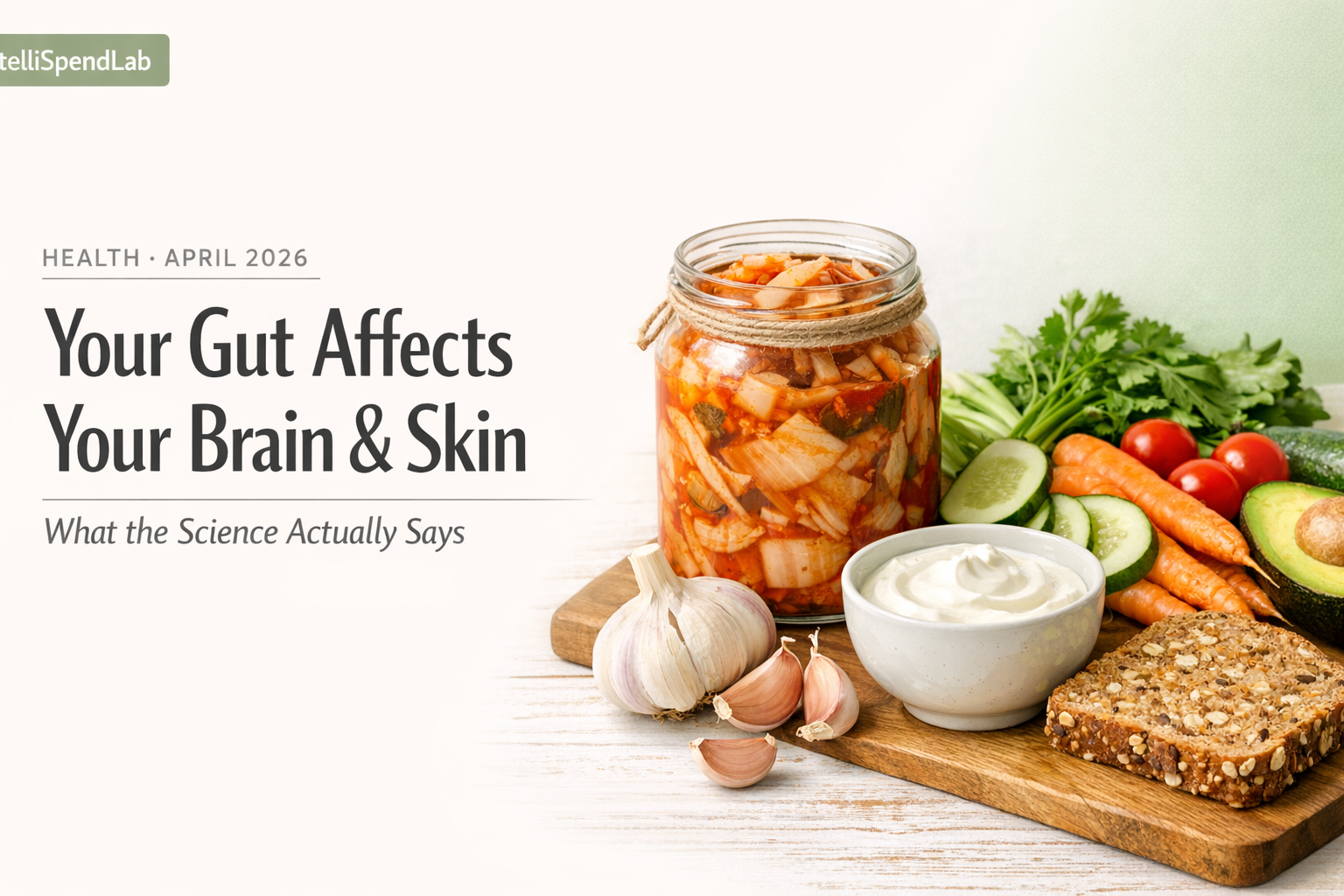
Your Gut Health Affects Your Brain, Skin, and Mood — Here’s What the Science Actually Says
Published: April 14, 2026 | Category: Health
“Gut health” has become one of the most searched wellness topics of 2026. Probiotics, fermented foods, fiber supplements — the category is everywhere. But most of the conversation skips the part that actually matters: what your gut microbiome does, why it’s connected to things far beyond digestion, and what genuinely moves the needle.
Here’s the honest science, without the marketing hype.
What the Gut Microbiome Actually Is
Your gut contains roughly 100 trillion microorganisms — bacteria, viruses, fungi, and other microbes — collectively called the gut microbiome. The gut microbiome contains approximately 3.3 million non-redundant microbial genes, which is 150 times greater than the 21,000 genes encoded by the human genome. While humans share 99.9% genetic similarity with one another, their gut microbiomes can differ by as much as 80–90%, highlighting its dynamic and individualized nature. Frontiers That last number is striking. Your gut microbiome is more uniquely yours than your DNA. And it changes based on what you eat, how you sleep, your stress levels, and medications you take — sometimes within 24 hours of a dietary change.
Why It Affects Far More Than Digestion
This is where most people are surprised. The gut microbiome doesn’t just process food. Certain neurotransmitters like GABA and serotonin produced by gut bacteria play a vital role in the gut-brain axis. Dysbiosis in the gut microbiota has been linked to various psychiatric and neurological disorders like anxiety, depression, bipolar disorder, and neurodegenerative conditions like Alzheimer’s and Parkinson’s. Beyond neurological implications, the gut microbiota is also linked to metabolic and cardiovascular diseases, including obesity, hypertension, and coronary artery disease. Frontiers The gut-skin connection is also well-established. Inflammation originating in a disrupted gut microbiome can manifest as acne, eczema, rosacea, and accelerated skin aging. The same inflammatory pathways that affect the gut reach the skin through the bloodstream.
Gut bacteria produce short-chain fatty acids — special compounds that protect your colon and boost your gut health. They help lower inflammation, regulate your immune system, and stimulate the production of GLP-1, the powerful satiety hormone that’s mimicked by weight-loss drugs such as Wegovy. The Washington Post In other words, a healthy gut microbiome naturally produces some of the same effects that people are now paying thousands of dollars for in prescription medications.
Signs Your Gut Microbiome May Need Attention
Some common signs that the gut microbiome may need support include: stomach upset including bloating, gas, constipation, diarrhoea, or heartburn; disrupted immunity; hormonal fluctuations; mood changes; skin flare-ups; and unexplained fatigue. Napiers These signs aren’t diagnostic on their own — they can have many causes. But if several of them are present consistently, the gut microbiome is a logical place to start investigating.
What Actually Improves Gut Health
1. Dietary Diversity — The Single Most Important Factor
Aim for a high-fiber diet that’s roughly 70% plant-based — and don’t forget fermented foods. While your microbiome can shift gears within just 24 hours of a dietary change, it’s your long-term habits that truly determine which microbes stick around. Seed The research is consistent: microbial diversity correlates with health outcomes, and dietary diversity drives microbial diversity. Eating 30+ different plant foods per week is a commonly cited target from microbiome researchers. This sounds like a lot until you realize herbs, spices, nuts, and seeds all count.
2. Fiber — Prebiotic and Fermentable
Not all fiber is equal for gut health. Prebiotic fiber — found in garlic, onions, leeks, asparagus, oats, and Jerusalem artichokes — specifically feeds beneficial gut bacteria. When gut bacteria ferment this fiber, they produce butyrate, propionate, and acetate: short-chain fatty acids that are the primary fuel for colon cells and key regulators of inflammation.
Studies have demonstrated that aerobic exercise for 30–60 minutes can increase butyrate-producing bacteria in the gut, regardless of BMI. The butyrate these bacteria produce serves as a key energy source for colon cells, helps maintain intestinal barrier integrity, and has anti-inflammatory properties. Performance Lab®
3. Fermented Foods — Probiotics You Can Eat
The research on probiotic supplements is mixed — strain specificity matters, and most supplements don’t survive the journey to the large intestine intact. Fermented foods are a more reliable route.
Kefir, live yogurt, kimchi, sauerkraut, miso, tempeh, and kombucha all contain live bacteria that support microbiome diversity. The key: “live and active cultures” on the label, and refrigerated rather than shelf-stable products (heat processing kills the bacteria).
4. Reducing Microbiome Disruptors
Limit microbiome disruptors: alcohol, ultra-processed foods, and artificial sweeteners. These directly damage gut microbial communities. Studies indicate that specific zero-calorie sweeteners can disrupt normal bacterial balance, paradoxically triggering glucose intolerance. Seed The Western diet pattern — high in processed foods, refined sugar, and low in plant fiber — is the single biggest driver of poor microbiome health. Mice fed a Western-style diet were not able to rebuild a healthy, diverse gut microbiome following antibiotic treatment, while mice on a Mediterranean-style diet quickly restored a healthy and resilient microbiome after the same antibiotic course. University of Chicago
5. Sleep and Stress Management
Chronic stress elevates cortisol, which directly alters gut bacterial composition. Poor sleep disrupts the circadian rhythm of gut bacteria, which have their own daily activity cycles. Both are underappreciated drivers of gut microbiome health that no supplement can compensate for.
What Doesn’t Work (Despite the Marketing)
Expensive probiotic supplements without dietary change: A probiotic pill taken alongside a Western diet is unlikely to produce meaningful results. The incoming bacteria can’t establish themselves in an environment that doesn’t support them.
Juice cleanses and “gut resets”: No clinical evidence supports the idea of “flushing” or “resetting” the gut microbiome with short-term liquid diets. These often reduce diversity rather than improving it.
Single-strain probiotics for complex conditions: The gut contains thousands of species. A single-strain supplement addressing depression or skin conditions is, at this stage, largely marketing.
The Simple Framework
Gut health can be improved by eating a fiber-rich, varied diet, managing stress, prioritising sleep, and considering probiotics or fermented foods when appropriate. Some people notice changes within weeks, while others may take longer. Consistency with diet and lifestyle habits is key. Napiers The unsexy truth: consistent dietary diversity over months is what changes your gut microbiome. There’s no shortcut, but the payoff — in energy, mood, skin health, and immune function — is real and measurable.
Note: This article is for informational purposes. If you’re experiencing persistent digestive symptoms, consult a healthcare provider. Individual gut health is highly personal, and what works varies from person to person.