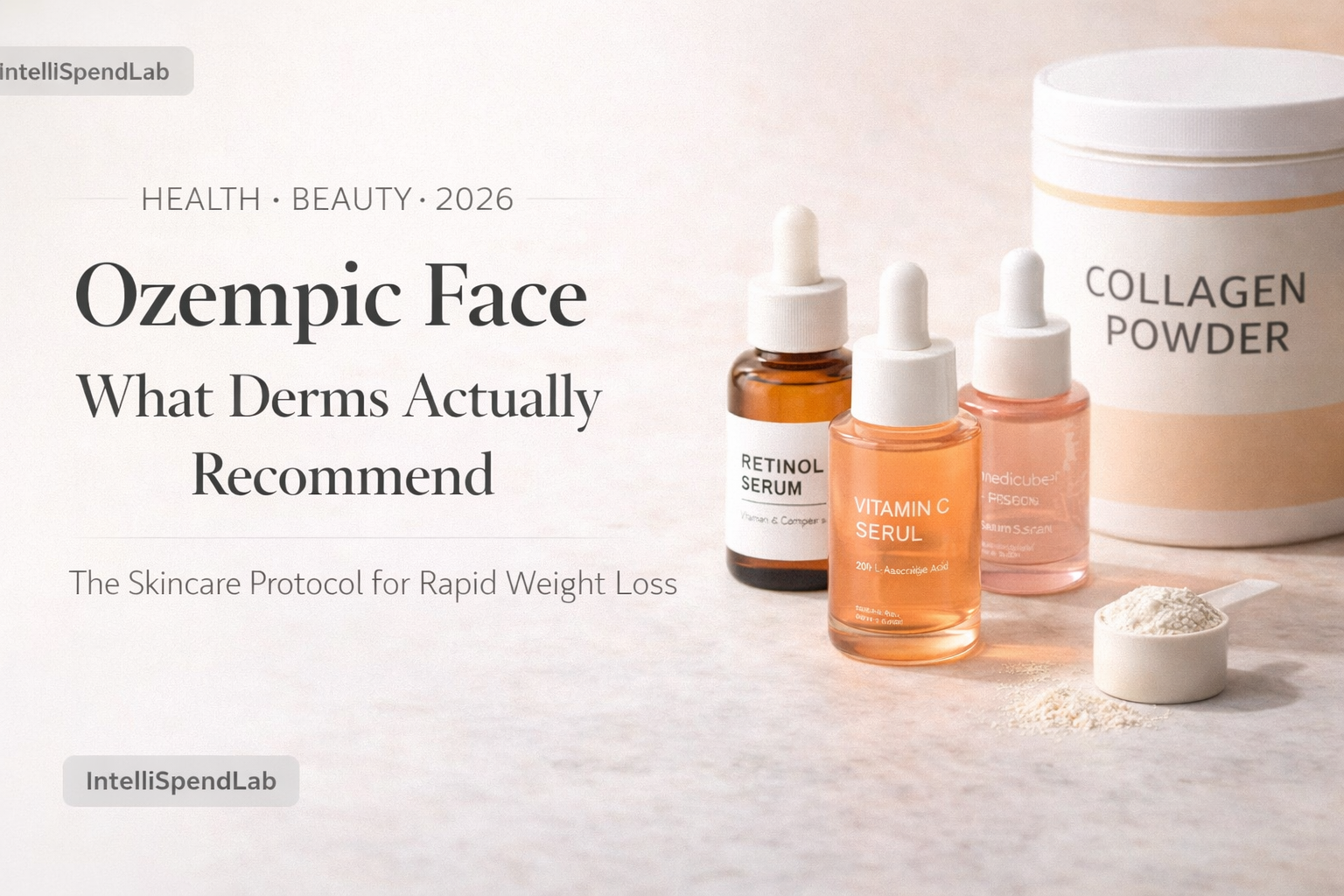
“Ozempic Face” Is Real — Here’s What Dermatologists Recommend for Skin After Rapid Weight Loss
Published: April 8, 2026 | Category: Health · Beauty
GLP-1 medications like Ozempic, Wegovy, and Mounjaro have changed the weight loss conversation completely. An estimated 13% of U.S. adults have now used a GLP-1 drug — an unusually fast uptake for a prescription medication. Weekly injections can lead to a 10–15% reduction in body weight, levels typically associated with bariatric surgery. Glimpse
But alongside the weight loss, millions of users are noticing something unexpected in the mirror: changes to their face and skin that nobody warned them about.
It has a name now. “Ozempic face.”
What Is Ozempic Face?
“Ozempic face” describes the visible facial changes that can occur with rapid weight loss — particularly the loss of facial fat that provides volume, structure, and that youthful fullness most people take for granted.
When you lose weight quickly, your body doesn’t selectively remove fat from your abdomen first. Fat loss happens throughout the body, including the face — particularly in the cheeks, temples, and around the eyes. The result can be:
- Hollowed cheeks and more pronounced bone structure than expected
- Loose or crepey skin that hasn’t had time to contract with the fat loss
- Deepened nasolabial folds (the lines from nose to mouth)
- Under-eye hollowing — a more tired or aged appearance
- Loss of the “plumpness” cushion that makes skin look smooth
The rise of GLP-1s for weight loss has led to a growing demand for sculpting and toning skincare solutions — consumers increasingly searching for ways to address skin elasticity and volume without a GLP-1 prescription or additional procedures. Fashionista
This isn’t vanity. It’s a real physiological effect of rapid volume loss, and it’s driving an entirely new category of skincare products and treatments in 2026.
The Skin Science Behind It
Skin elasticity depends on collagen and elastin — the proteins that allow skin to “snap back” after stretching. Gradual weight loss gives skin time to slowly contract. Rapid weight loss (which GLP-1 medications can produce) outpaces the skin’s ability to retract, leaving lax skin with less structural support underneath.
Additionally, fat cells in the face don’t just provide volume — they secrete growth factors and other compounds that support skin health. When that fat compartment shrinks significantly, skin can lose some of that biological support.
The good news: skin has remarkable regenerative capacity, especially when given the right support. Most of what “Ozempic face” causes can be meaningfully addressed with the right combination of topical ingredients, hydration, and in some cases, professional treatments.
What Dermatologists Recommend: The Topical Protocol
1. Collagen-Supporting Actives — Retinol + Vitamin C
These two ingredients have the deepest evidence base for stimulating collagen synthesis in skin.
Retinol (vitamin A derivatives) signals skin cells to increase collagen production and accelerate cell turnover. The result over months of consistent use: firmer, denser-feeling skin with improved texture.
Start at low concentrations (0.025–0.05%) 2–3 times weekly and build up. Expect some initial adjustment (dryness, sensitivity) that resolves within 3–4 weeks.
Vitamin C (particularly L-ascorbic acid or stable derivatives) is essential for collagen cross-linking — the process that gives collagen its structural strength. Consumers in 2026 are connecting what’s happening inside their bodies to how their skin shows up — understanding that collagen support requires both topical actives and systemic support. Beauty Independent
2. Barrier Repair — Ceramides + Niacinamide
Skin that’s lost volume often also loses some of its barrier function. Prioritize products with ceramides (CeraVe, La Roche-Posay), niacinamide (reduces inflammation, improves texture), and hyaluronic acid (draws moisture into skin cells).
3. PDRN — The Regenerative Ingredient of 2026
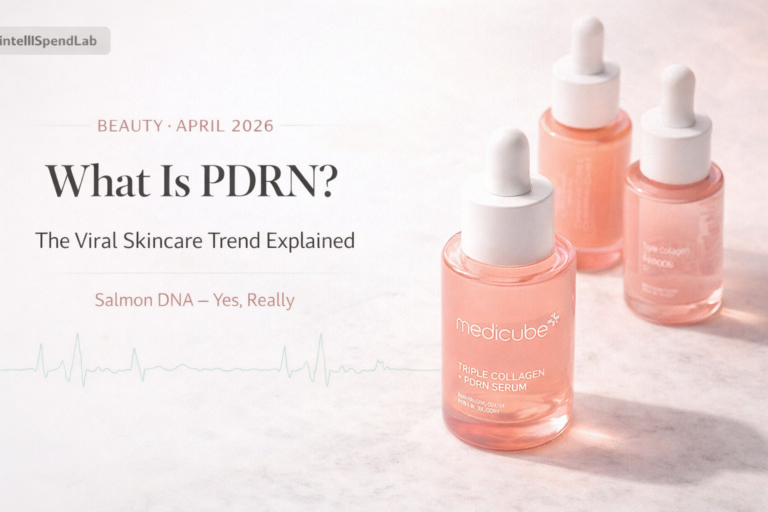
This is where the timing is interesting. PDRN (salmon DNA-derived polydeoxyribonucleotide) stimulates tissue repair, supports collagen production, and improves overall skin quality. PDRN represents a compelling bridge between clinical science and accessible self-care — fitting perfectly into the bio-regenerative philosophy that consumers want in 2026. EverGlow Bliss
For skin recovering from rapid weight loss, PDRN’s regenerative mechanism is particularly relevant. Products like Medicube PDRN Pink Peptide Serum ($24) or Rejuran Turnover Ampoule ($52) are solid starting points.
4. Peptides — Structural Support Signals
Peptides are amino acid chains that signal skin to produce more collagen and elastin. Look for multi-peptide serums — products from The Ordinary, Paula’s Choice, or Olay Regenerist that combine multiple peptide complexes in effective concentrations.
The Supplement Side
Collagen peptides (hydrolyzed collagen, 10–20g daily) have modest but real evidence for supporting skin elasticity from the inside out. Vital Proteins and NOW Foods are the most accessible options.
Vitamin C (500mg daily) supports collagen synthesis systemically — working alongside topical vitamin C for a two-pronged approach.
Creatine — as covered in our recent guide — has emerging evidence for skin cell energy metabolism support, though this isn’t its primary mechanism.
Professional Options (When Topicals Aren’t Enough)
For significant volume loss or skin laxity, professional treatments offer more dramatic results:
Biostimulators (Sculptra, Radiesse) — injectable treatments that stimulate collagen production rather than just filling volume. Often preferred over traditional fillers for Ozempic face because they address the underlying structural loss.
Microneedling with PDRN or exosomes — creates controlled micro-injury that triggers repair response; combining with regenerative serums amplifies results.
Radiofrequency treatments (Thermage, Morpheus8) — stimulate collagen tightening in lax skin. Particularly useful for lower face and neck.
These require a dermatologist or aesthetician consultation. Not substitutes for — but powerful complements to — a consistent topical routine.
The Honest Timeline
Skin doesn’t transform in weeks. Here’s a realistic expectation:
| Timeframe | What You Can Expect |
|---|---|
| 4–6 weeks | Improved hydration, texture, glow |
| 8–12 weeks | Early collagen stimulation visible |
| 6 months | Meaningful improvement in firmness |
| 12 months | Maximum topical benefit — maintain |
The most important variable: consistency. A $10 retinol used every night for 6 months outperforms a $200 serum used sporadically.
The Starter Kit (All on Amazon)
| Product | Role | Price |
|---|---|---|
| CeraVe Moisturizing Cream | Barrier repair base | $18 |
| The Ordinary Retinol 0.5% | Collagen stimulation | $12 |
| TruSkin Vitamin C Super Serum | Brightening + collagen | $20 |
| Medicube PDRN Pink Peptide Serum | Regenerative support | $24 |
| Vital Proteins Collagen Peptides | Internal support | $30 |
Total investment: ~$104. Used consistently over 6 months, this routine addresses the core mechanisms behind volume-loss skin changes far better than any single expensive product.
Related reads: