
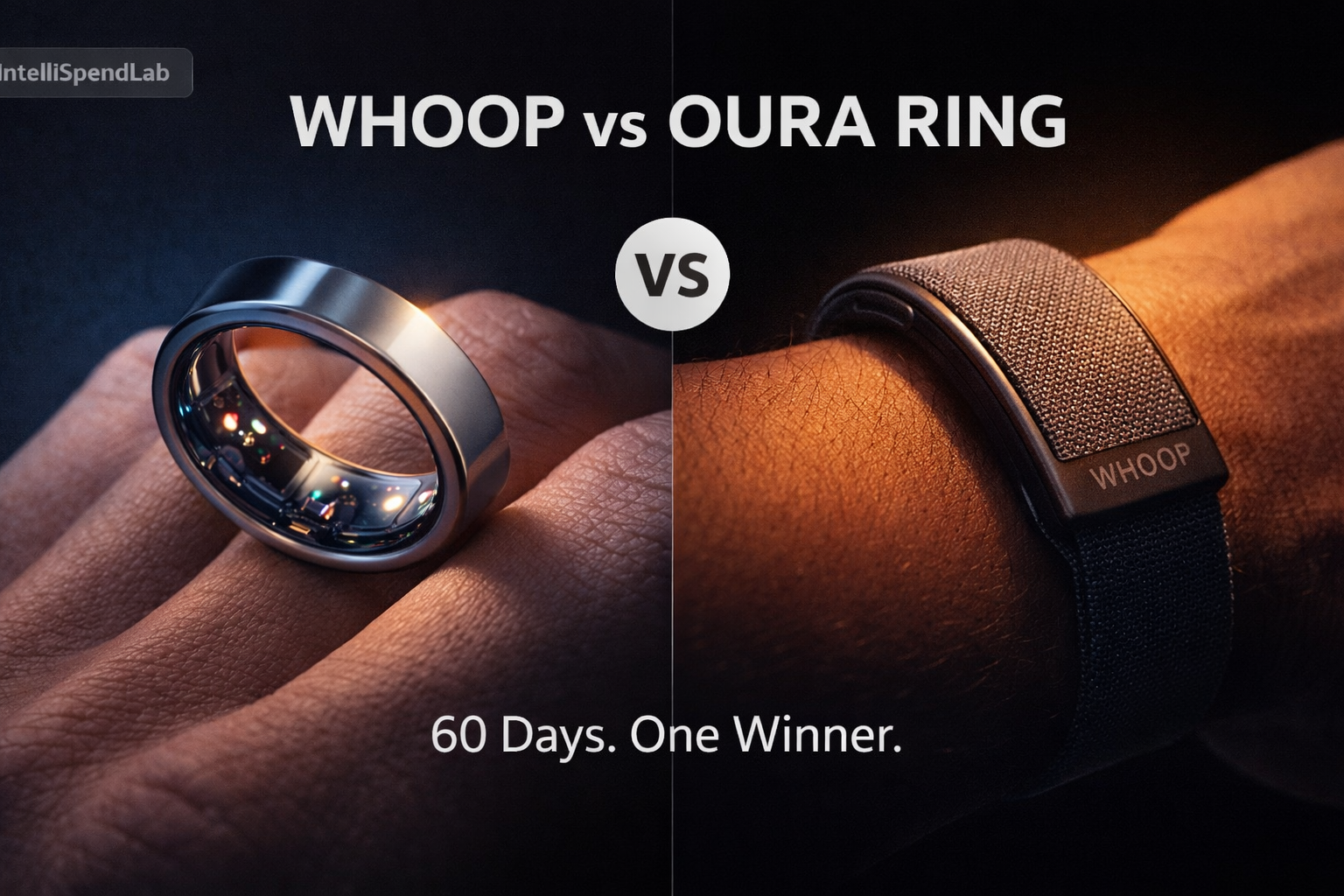
WHOOP vs Oura Ring Gen 4 (2026): I Wore Both for 60 Days — Here’s Who Actually Wins
Last updated: April 2026 | Category: Tech · Health
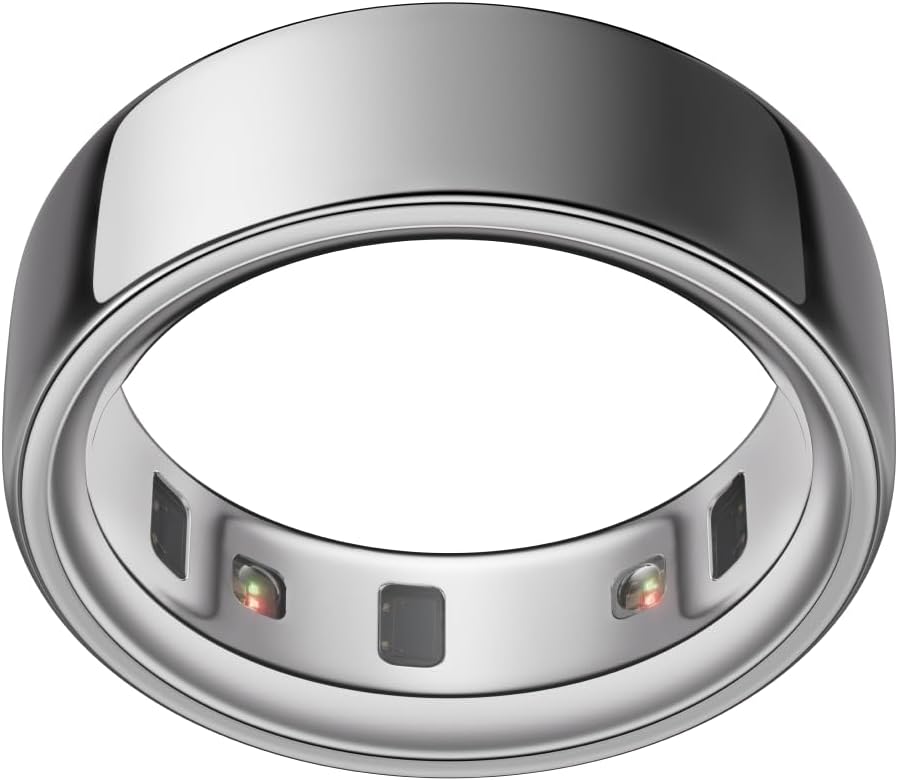
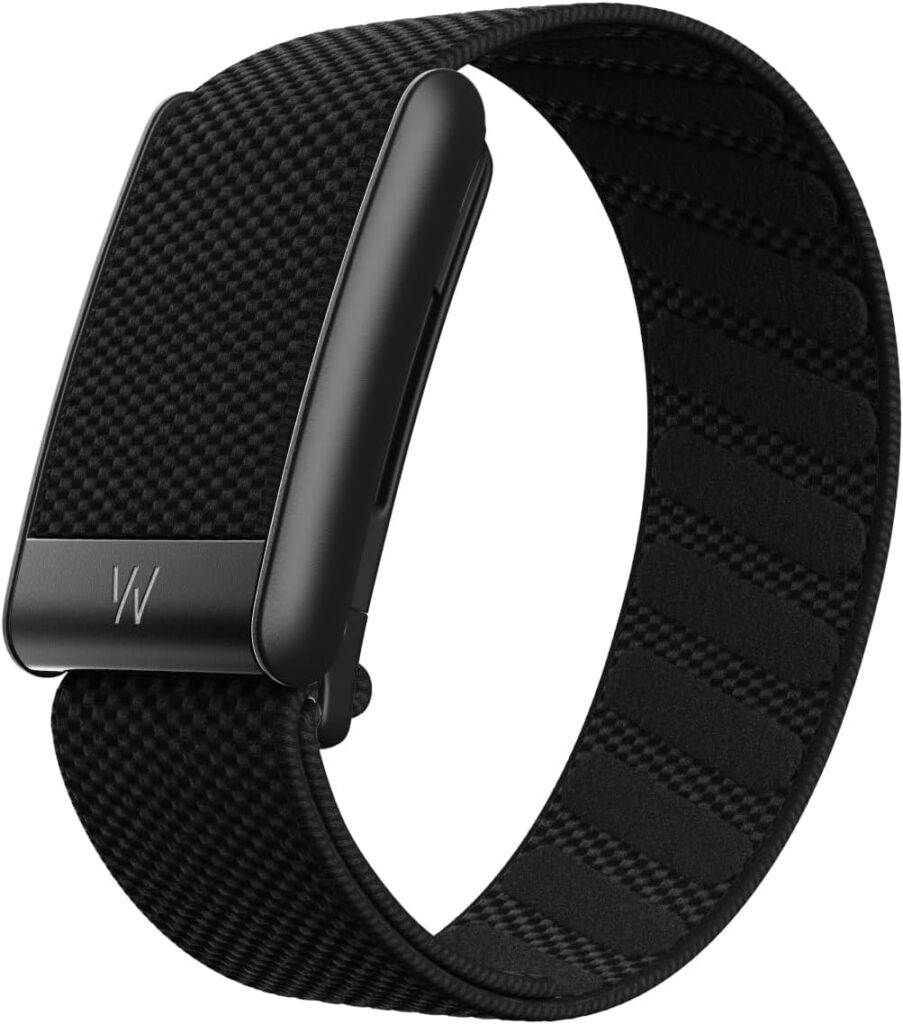
Both WHOOP and the Oura Ring promise the same thing: understand your body better, recover smarter, perform at your peak.
Both cost a premium. Both require subscriptions. Both track sleep, HRV, and recovery without a screen on your wrist.
So which one actually delivers — and which one is right for you specifically?
I wore both simultaneously for 60 days across varied conditions: high-stress work weeks, travel, heavy training, poor sleep, alcohol, illness. Here’s what I found.
The Core Difference Nobody Talks About
Most comparisons focus on specs. Sensors, battery life, price per month.
The real difference is philosophy.
WHOOP treats your body like an athlete’s training system, obsessing over strain and recovery as the core loop. Oura treats your body like a biological system, emphasizing sleep quality and physiological readiness. Vora
That distinction sounds abstract until you live with both devices. Then it becomes the clearest thing in the world.
WHOOP asks: “How hard did you push, and are you recovered enough to push again?” Oura asks: “How is your body doing right now, and what does it need?”
If you’re a serious athlete optimizing performance cycles, that’s a different device than if you’re a professional trying to manage stress, sleep, and long-term health. Understanding which question you actually want answered is 80% of the decision.
What You’re Actually Paying For
Before we get into features, let’s be honest about the money — because this is where most people get confused.
Oura Ring Gen 4
- Hardware: $349–$499 (one-time, depends on finish)
- App: $5.99/month or $69.99/year
- Year 1 total: ~$419–$569
- Year 2+: $70/year ongoing
WHOOP 5.0
- Hardware: $0 (included in membership)
- WHOOP One: $199/year (basic)
- WHOOP Peak: $239/year (adds aging metrics)
- WHOOP Life: $359/year (includes WHOOP MG with ECG + blood pressure)
- Year 1 total: $199–$359
- Year 2+: same annual fee, no hardware cost
At face value, WHOOP and Oura run neck and neck in price-to-value. Oura comes with a one-time hardware cost followed by a modest $69.99 yearly subscription that unlocks all features — no paywalls. WHOOP skips the upfront hardware fee but hits hard with $199–$359 annually, with many notable features like stress tracking, ECG, and blood pressure locked behind higher tiers. Cybernews
The honest math: If you use either device for 3+ years, Oura is cheaper. Under 2 years, WHOOP can be cheaper depending on tier.
Sleep Tracking: Oura Wins, and It’s Not Close
This is the category where the gap between devices is most meaningful.
Independent research comparing consumer wearables to medical-grade polysomnography has generally found that ring-based sensors show a slight advantage in some studies due to the proximity of finger arteries. Neither device is a medical sleep study replacement, but both are accurate enough to show meaningful trends over time. Heal Nourish Grow
But “both are accurate” obscures an important nuance. In practice, after 60 days of parallel tracking:
- Oura’s sleep stage breakdown is more granular and more consistent
- WHOOP’s sleep detection is reliable but shows more variability night-to-night
- Oura’s illness prediction via temperature deviation is genuinely impressive — it flagged elevated readings 36 hours before I felt sick during week 4
- WHOOP’s sleep coaching is more actionable in terms of “what time should I go to bed tonight” type guidance
The Oura Ring 4’s app is softer, friendlier, and less number-focused. The WHOOP app is more information-dense, filling the main page with buttons and options that feel overwhelming at first — and when you dig into many options, you notice a lot of repeated data. Digital Trends
For most people, Oura’s sleep data is more usable. WHOOP’s is more comprehensive for those who want to go deep.
Winner: Oura Ring
Recovery & HRV Tracking: Closer Than You Think
Both devices track HRV overnight and generate a daily recovery score. The methodologies differ.
WHOOP uses HRV, resting heart rate, respiratory rate, and sleep performance to generate a Recovery Score (0–100%). Green/yellow/red system. Clear, intuitive.
Oura uses HRV, temperature, activity history, sleep quality, and resting heart rate to generate a Readiness Score (0–100). Adds contextual factors like illness detection and sleep debt.
Both outperform the vast majority of smartwatches in recovery tracking. However, neither is flawless. If you take training seriously — CrossFit, triathlon, structured workouts, or biohacking — WHOOP offers a level of granularity no other wearable can match. Nextpit
In my testing, WHOOP’s recovery score was more responsive to acute stressors — a heavy workout, a late night, travel. Oura’s readiness score felt more stable and took a longer view.
For day-to-day training decisions: WHOOP is sharper. For understanding your body’s baseline patterns over months: Oura is richer.
Winner: Tie — depends on use case
Workout Tracking: WHOOP Wins
This isn’t close.
WHOOP automatically detects and categorizes dozens of activity types. Its Strain Score specifically measures cardiovascular load — a 0–21 scale that tells you how hard you pushed across the day. Its 2026-updated AI Strength Trainer uses the accelerometer to track reps and intensity in the gym.
The Oura Ring also tracks daily step count and activity, but many users find it inadequate for tracking workouts — especially lifting, where barbells and dumbbells will quickly scratch the ring. You may not be able to wear the Oura Ring during lifting sessions, leaving you no way to track them with the ring alone. Garage Gym Reviews
If you train seriously, WHOOP is a meaningful advantage here. Oura works fine for cardio and walking but falls short for gym-based training.
If Oura is a supportive wellness advisor, WHOOP is a data-driven performance coach. Allymonews
Winner: WHOOP
Design & Comfort: Oura Wins for Daily Life
The Oura Ring 4 is completely incognito — it looks like high-end jewelry and is comfortable enough to forget you’re wearing it. The WHOOP 5.0’s band is noticeably present on the wrist. There’s no hiding it, and most people will notice and question what it is. Digital Trends
This matters more than you’d expect. The best health tracker is the one you actually wear consistently. If you work in a professional environment, WHOOP’s gym-aesthetic can feel out of place. Oura disappears.
WHOOP’s advantage: versatility. You can move the WHOOP sensor into specialized clothing — bicep bands, sports bras, underwear — which is especially useful during heavy lifting when you don’t want anything on your wrists. This is something Oura simply cannot do. Allymonews
Winner: Oura for lifestyle; WHOOP for gym versatility
Battery Life
- Oura Ring Gen 4: Claimed 8 days. Real-world: 5–6 days with full tracking.
- WHOOP 5.0: 14 days. Plus a portable battery pack that charges the device while you wear it — meaning truly uninterrupted tracking.
WHOOP’s external battery pack slides over the band, allowing continuous monitoring without taking the device off — a very practical perk for uninterrupted data. Nextpit
Winner: WHOOP
The Subscription Question
Both require ongoing payments. That’s the reality of 2026 wearable health platforms.
But there’s an important nuance: WHOOP’s most compelling features — ECG, blood pressure monitoring, stress tracking — are locked behind the $359/year WHOOP Life tier. The $199 base tier feels incomplete by comparison.
Oura’s $69.99/year unlocks everything. No tiers, no paywalls.
Oura is the better choice if you prioritize sleep tracking accuracy and want a discreet form factor without ongoing commitment creep. WHOOP is stronger for athletes who want strain-based training guidance, ECG, and don’t mind a premium annual subscription. Simplewearablereport
Who Should Buy Which
Choose the Oura Ring Gen 4 if you:
- Care primarily about sleep quality and long-term health tracking
- Work in a professional environment where aesthetics matter
- Want the most accurate passive health monitoring available
- Prefer a lower ongoing subscription cost
- Use an iPhone (iOS integration is excellent)
- Want illness prediction and temperature trending
Choose WHOOP if you:
- Train seriously and want daily strain/recovery accountability
- Need real-time workout tracking and rep counting
- Want ECG and blood pressure monitoring (WHOOP Life tier)
- Don’t mind paying more annually for premium features
- Prefer a wrist-based form factor you can move to other body parts
- Want the most aggressive data coaching experience
Use both if you:
- Are a serious athlete who also wants comprehensive sleep data
- Many elite athletes and biohackers run both simultaneously — WHOOP for training days, Oura for sleep and baseline health
Final Verdict
Oura Ring Gen 4: 8.5/10 — Best for: sleep-focused professionals, everyday health optimization, iPhone users
WHOOP 5.0: 8/10 — Best for: serious athletes, performance-obsessed users, those wanting ECG features
Neither device is better in an absolute sense. They serve genuinely different users. The mistake most people make is buying the one with more hype rather than the one that matches how they actually live.
If you’re unsure: start with Oura. It’s the more versatile long-term device, it’s cheaper over time, and its sleep data alone justifies the cost for most people.
If you’re a serious athlete who lives by training data: WHOOP will change how you train.
👉 Check Oura Ring Gen 4 price on Amazon
👉 Check WHOOP 5.0 on Amazon
Related reads:



One Comment