
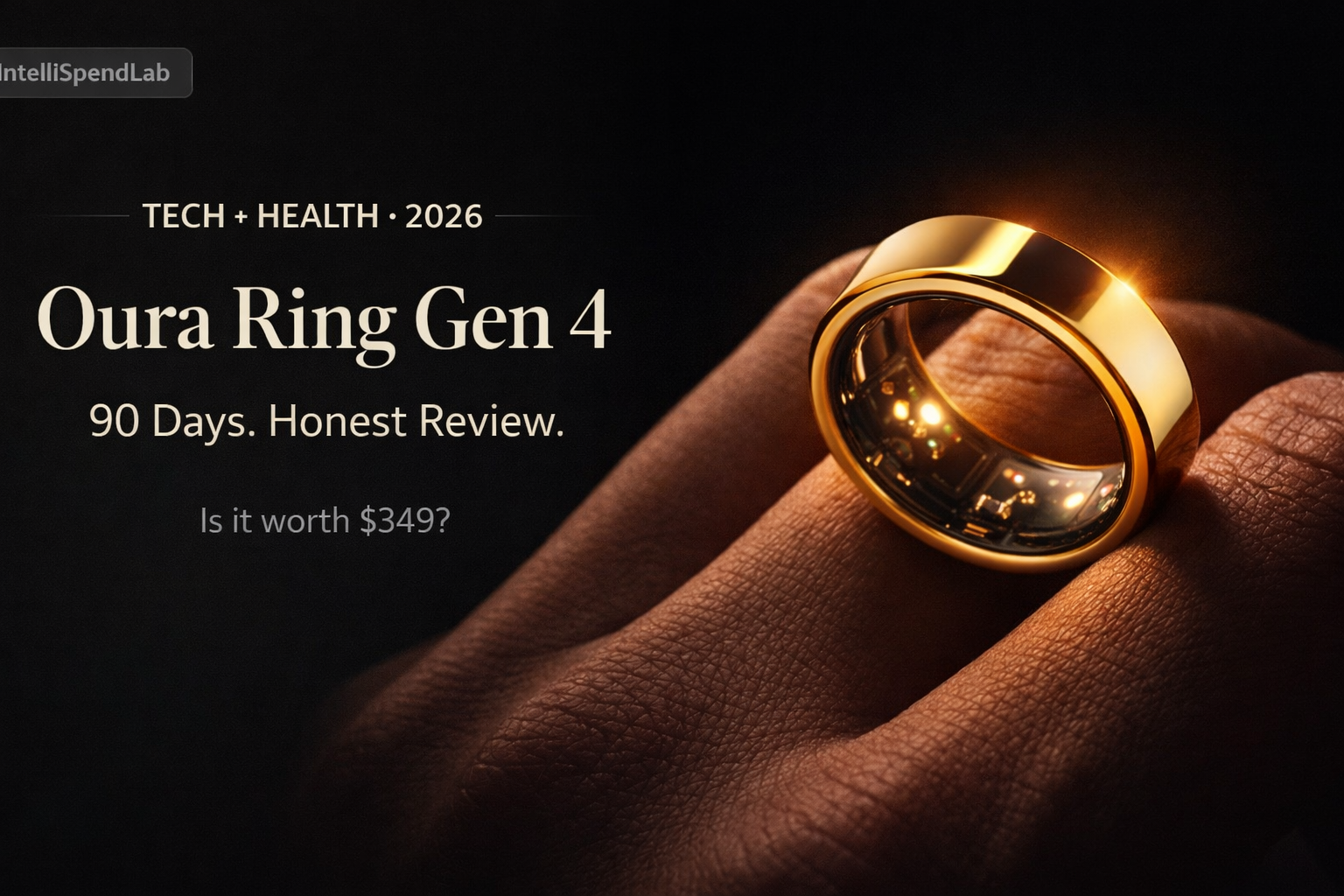
Oura Ring Gen 4 Review (2026): I Tested It for 90 Days — Here’s the Honest Truth
Let’s get one thing out of the way first.
The Oura Ring Gen 4 costs $349. Then $5.99 a month for the app. Over a year, you’re looking at $421 before you’ve tracked a single REM cycle.
So the question isn’t “is this a good product?” — it clearly is. The question is: is it worth that money, for you, specifically?
After 90 days of daily wear, I have a clear answer. But it’s not the same answer for everyone.
What the Oura Ring Actually Does (And What It Doesn’t)
Before we get into whether it’s worth buying, it helps to understand what category of product this actually is.
The Oura Ring is not a fitness tracker. It won’t replace your Apple Watch or your Garmin. It doesn’t have GPS. It won’t show you your pace mid-run or buzz your wrist with text messages.
What it does is this: it sits on your finger 24/7, quietly collecting data — heart rate, heart rate variability (HRV), skin temperature, blood oxygen, movement — and every morning it synthesizes that into three scores:
- Readiness Score — how recovered your body is today
- Sleep Score — how well you actually slept
- Activity Score — how much you’ve moved
The app turns all those complicated biometric numbers into simple, easy-to-digest daily insights. Most mornings start the same way — before checking Instagram or email, you open the Oura app to see your sleep score and readiness score for the day. Some days it tells you you’re well-rested and ready to push yourself. Other days, it suggests taking things slower. WearableXP
That shift — from reactive to proactive — is the core value proposition. And for the right person, it’s genuinely life-changing.
Gen 4 vs Gen 3: What Actually Changed
If you’re upgrading from a Gen 3, the honest answer is: the hardware improvements are real, but modest.
The biggest changes in Gen 4:
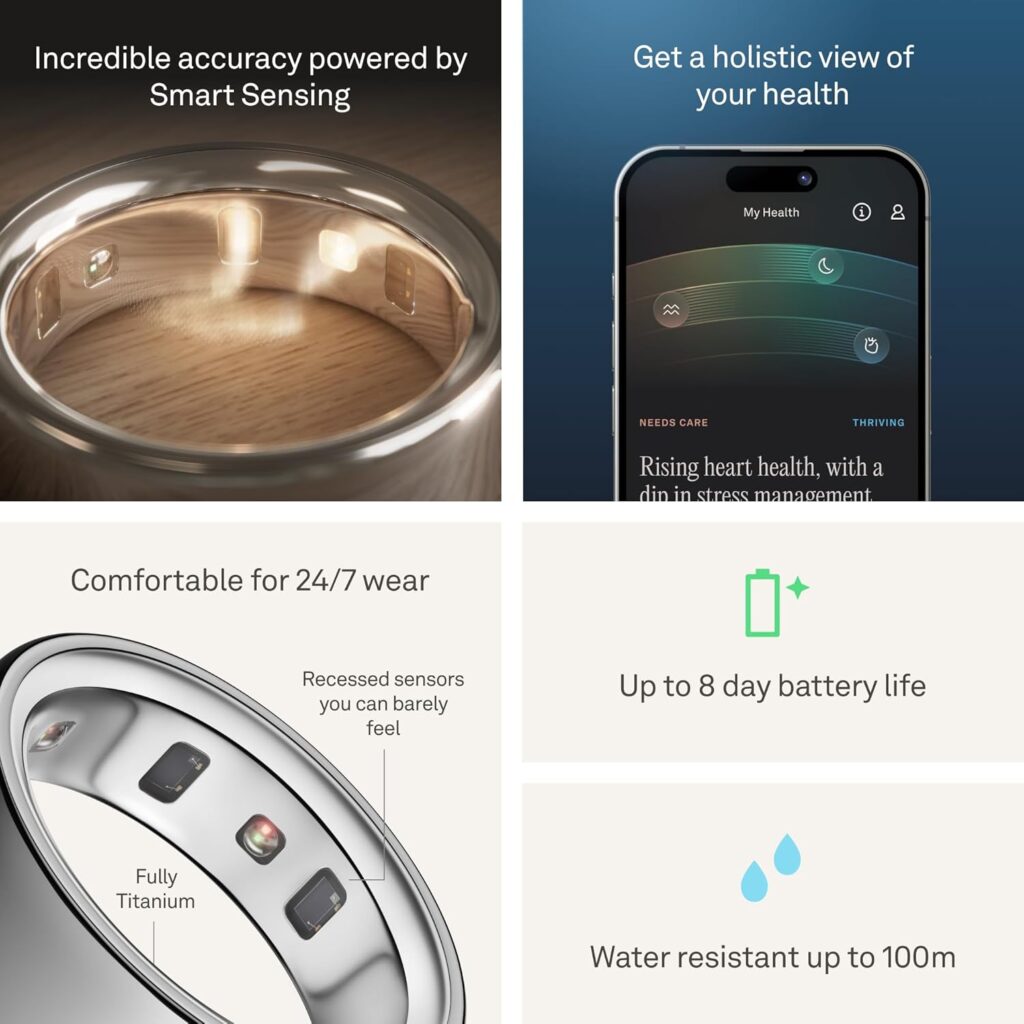
Smart Sensing (18 signal pathways vs 8) — the ring now adapts how it reads your biometrics based on your unique finger anatomy and movement patterns. Gen 3 used fixed algorithms, causing data gaps for roughly 15% of users. Gen 4’s machine learning approach repositions signal priorities based on your finger’s unique anatomy — solving a problem Oura rarely explained well. NexraGear
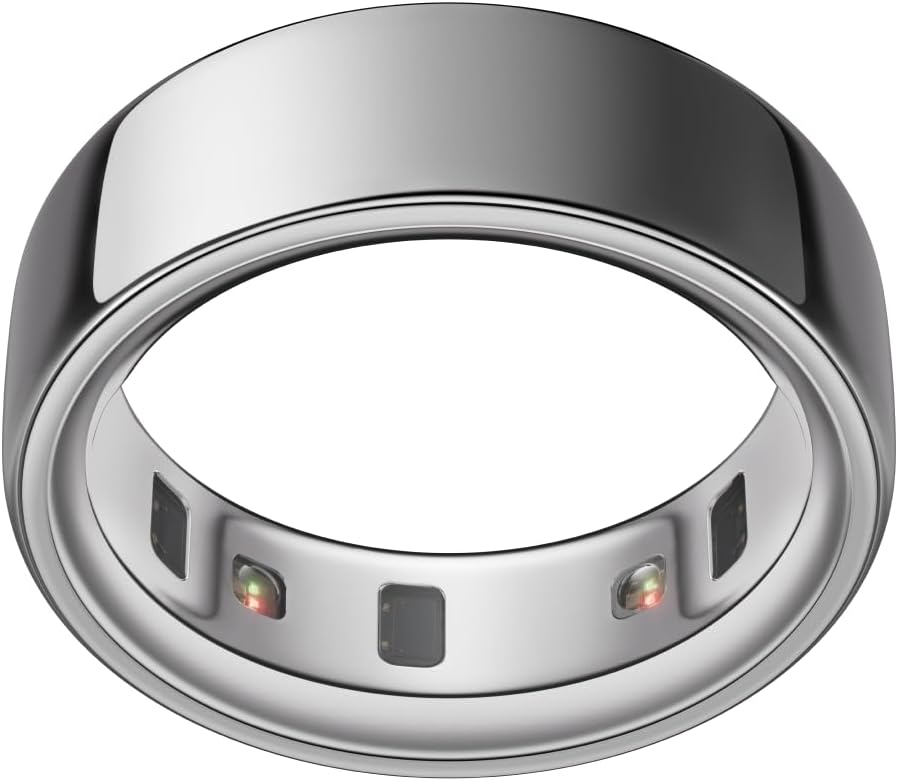
All-titanium build — the interior was previously partially resin. Now it’s fully titanium, which means it’s flatter against your finger, more durable, and gentler on sensitive skin.
Expanded sizing — sizes 4–15, wider than before. Oura sends a free sizing kit before you commit to a size, which is essential because finger size fluctuates throughout the day.
8-day battery (up from 7) — in practice, expect 5–6 days with all tracking enabled, with an average daily drain of around 15% including full nights of sleep tracking. Wareable The advertised 8 days requires conservative settings.
If you own a working Gen 3: the upgrade is incremental. Wait for Gen 5 unless your battery is degrading or you want the improved fit.
If you’re buying new in 2026: Gen 4 is the obvious choice.
Sleep Tracking: Where Oura Has No Real Competition
This is the Oura Ring’s defining strength, and it’s not close.
A study from Brigham and Women’s Hospital compared the Oura Ring Gen 3, Apple Watch Series 8, and Fitbit Sense 2 against polysomnography — the clinical gold standard for sleep assessment. The Oura Ring offered the highest sensitivity for detecting deep sleep at 79.5%, compared to 61.7% for Fitbit and just 50.5% for Apple Watch. Tom’s Guide
Put simply: when you wear an Apple Watch to bed and it tells you “you got 1.5 hours of deep sleep,” that number is probably off. When Oura tells you that number, it’s significantly more accurate.
The Oura Ring 4 achieved 79% agreement with polysomnography in four-stage sleep classification, outperforming both Apple Watch (74%) and Fitbit (69%) when adjusted for chance. liveworksleep
Why does accuracy matter? Because if you’re making decisions about your lifestyle — going to bed earlier, cutting alcohol, adjusting caffeine timing — based on sleep data, you need that data to be trustworthy. Bad data leads to bad decisions.
The sleep tracking also goes beyond stages. Oura tracks:
- Resting heart rate throughout the night
- HRV during sleep (a key recovery indicator)
- Skin temperature deviation (this is how it detects illness before you feel sick)
- Blood oxygen (SpO2)
- Sleep timing and consistency (your circadian pattern)
The Oura Ring says you’re an early evening type, and you might initially disagree — but if you listen to it, you feel less tired. Another software win: the Symptom Radar feature can flag something seems wrong one day, and 24 hours later you’re half-sick from a cold. Overkill Media
That illness prediction is legitimately impressive. Skin temperature deviates 1–2 days before you feel symptoms. Multiple reviewers report catching colds and infections before onset based on Oura flags alone.
HRV and Readiness: The Feature That Changes Behavior
HRV — heart rate variability — is the gap between consecutive heartbeats. A higher gap means your nervous system is recovering well. A lower gap means you’re stressed, overtrained, or run down.
The Oura Ring measures HRV throughout the night and compares it to your personal baseline, not a generic average. Recovery is where Oura clearly differentiates itself. HRV is sampled throughout the night and contextualized against personal baselines, recent strain, sleep quality, and temperature trends — generating readiness scores that meaningfully respond to illness, overtraining, travel, alcohol consumption, and sleep debt, often before you subjectively feel off. WatchRanker
In practice, this is the feature that changes how you train, how you manage stress, and how seriously you take recovery.
One user tagged stressors like ‘coffee,’ ‘argument,’ and ‘meetings’ in the app and suddenly knew exactly what made them most stressed — becoming a calmer person who takes breaks instead of pushing through. WearableXP
This is the kind of behavioral change that a $349 ring can actually generate. Not theoretical wellness. Actual behavior modification based on real data about your body.
The Honest Drawbacks
1. The subscription model is genuinely frustrating
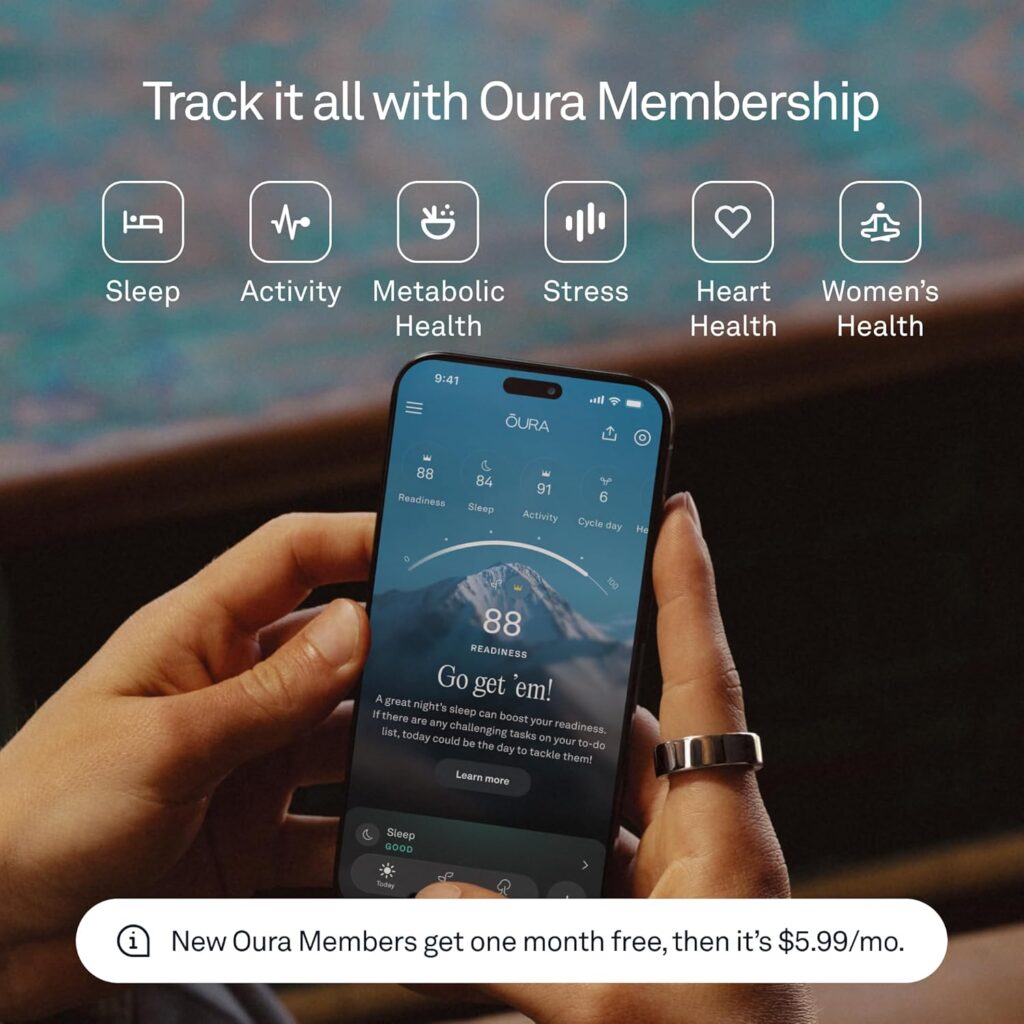
Without the Oura Membership, you only see three basic daily scores. The full platform — historical data, readiness insights, advanced metrics — requires $5.99/month or $69.99/year. It’s hard to justify this ongoing cost when there are subscription-free trackers that provide similar surface-level value. Live Science
This is the most legitimate criticism of Oura. You’re paying for hardware AND a recurring software fee. If Oura ever shuts down the app or changes pricing, your $349 ring becomes significantly less useful.
2. Workout tracking is weak
The ring auto-detects 40+ activity types, but real-time heart rate during intense exercise is unreliable. If you want accurate workout metrics — pace, power zones, real-time HR — you still need a smartwatch or chest strap for training.
Oura is best understood as complementary to workout tracking, not a replacement for it. It tells you how your body responded to yesterday’s workout, not how hard you pushed during it.
3. Sizing is tricky
Finger size changes throughout the day — up to half a size between morning and evening. Use the free sizing kit Oura sends before purchasing. Getting this wrong is a $200 mistake because returns on worn rings are complicated.
4. Bulkier than Samsung Galaxy Ring
The Oura Gen 4 is 7.9mm wide and 2.88mm thick, and on the finger it’s noticeably bulkier than the Samsung Galaxy Ring. Samsung wins the design battle. Wareable For people who don’t typically wear rings, the adjustment period is real.
Oura Ring vs Samsung Galaxy Ring: Which Should You Buy?
The Samsung Galaxy Ring launched in 2024 at $399 — no subscription fee — and is the only serious competition to Oura right now.
Here’s how to decide:
Choose Oura Ring Gen 4 if:
- You have an iPhone (Oura’s iOS integration is significantly better)
- Sleep and recovery tracking is your primary goal
- You want the most clinically validated data
- You’re serious about long-term health tracking and willing to pay for depth
Choose Samsung Galaxy Ring if:
- You’re on Android / Samsung ecosystem
- You want to avoid subscription fees entirely
- Design and comfort feel are higher priorities than data depth
- You already have a Samsung Watch for workout tracking
The choice between them is relatively straightforward: if you have a Samsung phone and don’t want a monthly subscription, the Galaxy Ring is your best bet. If you want more advanced insights and don’t mind the monthly fee, Oura is the top choice. TechRadar
The honest answer: Oura’s data is deeper and more validated. Samsung’s ring is lighter, cheaper long-term, and better for the Android ecosystem. Neither is wrong — they serve different users.
Who Should Buy the Oura Ring Gen 4
Strong yes if you:
- Already care about sleep and want to understand it better
- Work high-stress jobs and want an objective recovery signal
- Train regularly and want to know when to push vs. rest
- Have ever dealt with sleep issues, anxiety, or chronic fatigue
- Are willing to actually look at the data and act on it
Skip it if you:
- Want a smartwatch replacement (it isn’t one)
- Are primarily focused on workout tracking (get a Garmin or Apple Watch)
- Won’t consistently wear it and check the app (data is only valuable if you use it)
- Are price-sensitive (the Samsung Galaxy Ring or Ultrahuman Ring Air are more affordable alternatives)
- Are buying it hoping it will fix bad sleep without changing your behavior (it won’t — it only shows you the problem)
Final Verdict
Rating: 8.5 / 10
The Oura Ring Gen 4 is the most accurate passive health tracker available in 2026. Its sleep data is clinically validated, its illness prediction is genuinely uncanny, and its readiness scoring changes how you approach training and recovery in ways that are hard to quantify but easy to feel.
The subscription model is a fair criticism. The workout tracking is a known limitation. The sizing process requires patience.
But for the specific use case it’s designed for — understanding your body’s recovery, sleep quality, and stress response over time — nothing else comes close.
If that’s what you’re looking for, it’s worth it.
👉 Check current price on Amazon
👉 Oura Ring official site — includes free sizing kit
Related reads:

One Comment